
For large-scale infrastructure, energy, and industrial projects, selecting the right carbon steel pipe is not just a procurement decision—it directly affects safety, budget control, installation efficiency, and long-term performance.
Project managers must weigh material standards, pressure requirements, corrosion risks, supplier reliability, and total lifecycle cost before making a decision.
This guide highlights the key factors to consider when selecting carbon steel piping for demanding projects, helping engineering and procurement teams reduce risk and improve project execution.
Start with Project Conditions, Not Just the Price of Pipes
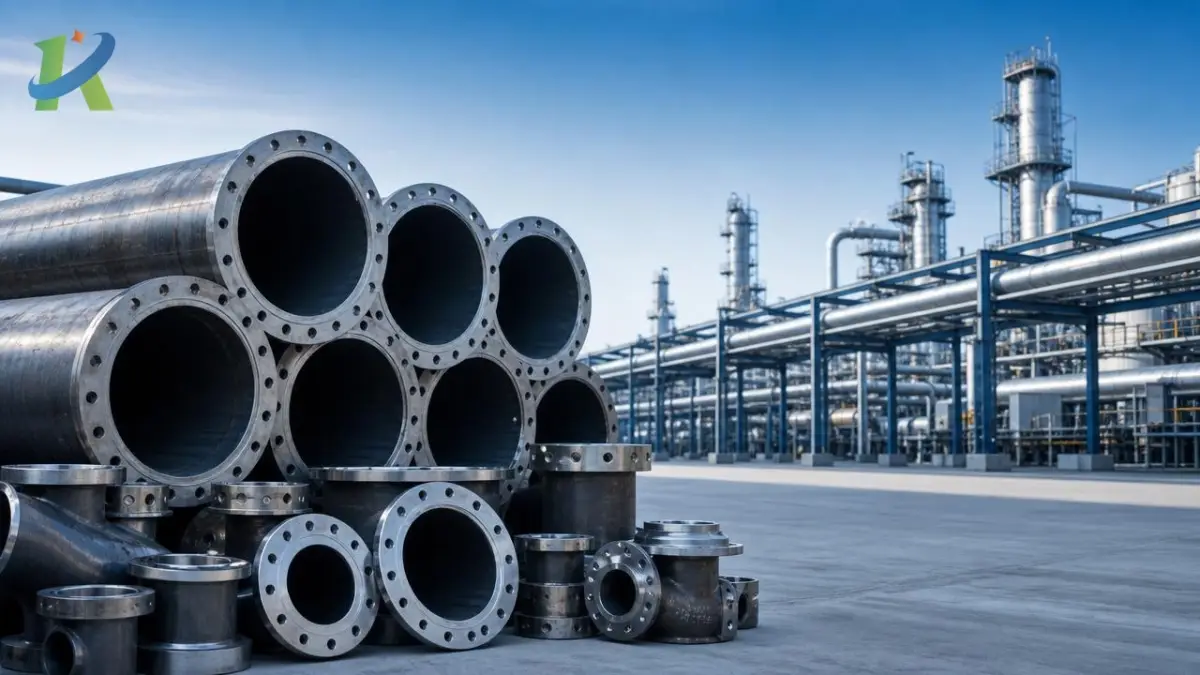
For large projects, the best carbon steel pipe is not always the cheapest option or the one with the highest specifications available.
The right choice starts with operating conditions, design requirements, the installation environment, inspection rules, and the consequences of a potential failure.
Project managers should avoid treating pipe selection as a simple purchase item, because pipe performance affects multiple project phases.
A low initial price can lead to additional costs later on due to welding delays, coating failures, failed inspections, leakage risks, or unplanned replacements.
The more complex the project, the more important it becomes to align procurement decisions with engineering assumptions and on-site realities.
Before requesting quotes, teams should specify the fluid type, operating pressure, temperature range, flow rate, location, expected service life, and applicable codes.
This early clarity reduces misunderstandings among suppliers and helps to compare bids based on equivalent technical requirements, rather than incomplete commercial descriptions.
Match Carbon Steel Pipe Grades to Design Requirements
Carbon steel pipe is available in a variety of grades, standards, wall thicknesses, and manufacturing methods, each suited to different operating conditions.
Common specifications may include ASTM, ASME, API, EN, DIN, JIS, or project-specific standards, depending on the region and application.
For pressure pipelines, mechanical strength, yield strength, tensile strength, and impact performance are critical evaluation criteria.
For structural or low-pressure applications, dimensional accuracy, weldability, availability, and installation efficiency may be more important.
Project teams should determine whether seamless or welded pipe is required, as this affects cost, delivery time, and the scope of inspection.
Seamless pipe is often chosen for high-pressure, high-temperature, or critical applications where uniform strength is preferred.
Welded carbon steel pipe can be suitable for many large-diameter applications, especially when specifications and weld quality are properly controlled.
Wall thickness must also be carefully evaluated, since insufficient thickness can compromise safety, while excessive thickness increases material and welding costs.
Using recognized pipe schedules or engineering calculations helps balance pressure capacity, corrosion allowance, and practical installation requirements.
Evaluate Pressure, Temperature, and Fluid Characteristics
Pressure and temperature are two of the most important factors to consider when selecting carbon steel pipe for large projects.
Higher pressure generally requires stronger materials, thicker walls, more rigorous testing, and more careful coordination with fittings, flanges, and valves.
Temperature is also important because the properties of steel can change under extreme heat or cold, affecting its toughness and long-term reliability.
For steam, oil, gas, water, slurry, or chemical service, the transported medium affects the risk of corrosion and internal wear.
Even when carbon steel appears to be suitable, the fluid may require an internal coating, lining, corrosion allowance, or additional monitoring.
Project managers should ask engineers to verify the design pressure, test pressure, surge conditions, and possible operating fluctuations.
It is also important to determine whether the system may be subject to vibration, thermal expansion, external loading, or buried service conditions.
These factors determine not only the choice of pipe, but also the design of supports, jointing methods, coating systems, and inspection strategies.
Control Corrosion Risk Before It Becomes a Cost Issue
Corrosion is one of the most common reasons carbon steel piping systems lose performance before the end of their expected service life.
Large projects often involve outdoor exposure, buried pipelines, marine environments, industrial emissions, or fluids containing corrosive elements.
Instead of addressing corrosion after installation, teams should determine protective measures during the design and procurement phase.
External coatings, galvanizing, painting systems, wrapping, cathodic protection, and proper drainage can significantly improve pipe durability.
Internal protection may include an epoxy lining, a cement mortar lining, chemical treatment, or the use of a different material when necessary.
The correct approach depends on soil conditions, humidity, temperature, fluid chemistry, maintenance access, and the required service life.
Project managers should request coating specifications, surface preparation standards, thickness requirements, holiday testing, and handling instructions from suppliers.
A pipe made of good base material but with a poor-quality coating can still fail prematurely in harsh environments.
For critical projects, corrosion planning should include inspection frequency, repair procedures, and documentation for future maintenance teams.
Choose Suppliers Based on Capability, Not Just Price
Supplier reliability can determine whether a large piping package keeps the project on schedule or becomes a bottleneck.
A qualified supplier should provide technical documentation, material certificates, production traceability, inspection records, and consistent dimensional control.
For large projects, delivery reliability is often just as important as the unit price, because installation crews depend on materials arriving on time.
Delays in pipe delivery can affect welding progress, equipment installation, hydrostatic testing, and commissioning milestones.
Project managers should evaluate production capacity, inventory availability, export experience, packaging quality, and references from previous projects.
They should also confirm whether the supplier understands the relevant standards and can accommodate third-party inspections when required.
Reliable suppliers typically provide clearer information regarding lead times, tolerances, coating options, loading methods, and documentation requirements.
When comparing quotes, teams should check whether prices include testing, coating, beveling, marking, packaging, certificates, and shipping terms.
An offer that appears to be low may exclude essential services, resulting in hidden costs during implementation or customs clearance.
Review Quality Inspection and Documentation Requirements
For large projects, inspection is not a mere formality; it is a risk-management tool that ensures safety and compliance with contractual obligations.
Carbon steel pipe should be inspected for chemical composition, mechanical properties, dimensions, surface condition, and compliance with the specified standard.
Depending on project requirements, testing may include hydrostatic testing, ultrasonic testing, radiographic testing, flattening tests, or impact tests.
Inspection plans should be agreed upon before production, especially for custom sizes, special coatings, or critical service applications.
Material test certificates should correspond to heat numbers, pipe markings, purchase orders, and inspection reports to ensure traceability.
Documentation errors can delay site acceptance even when the physical pipe meets technical requirements.
Project managers should coordinate with quality teams, consultants, contractors, and end users early on to avoid disputes over approvals.
Clear inspection and documentation requirements reduce rework, prevent delivery rejections, and facilitate a smoother handover upon project completion.
Consider Installation Efficiency and Site Constraints
The choice of piping affects how quickly and safely construction teams can complete installation at a large project site.
Large-diameter or heavy-wall carbon steel pipe requires lifting plans, storage space, welding procedures, and a qualified workforce.
If site access is limited, the pipe length, bundle size, and delivery sequence may need to be adjusted before shipment.
Beveled ends, protective caps, proper markings, and organized packaging can reduce handling time and prevent confusion during installation.
Weldability is another important factor, because difficult welding conditions can slow down progress and increase inspection failure rates.
Project teams should confirm compatible welding procedures, filler materials, preheating requirements, and post-weld heat treatment requirements, when applicable.
Coordination between the supplier, fabricator, and construction contractor helps prevent mismatches between pipes, fittings, flanges, and field assembly plans.
For projects with tight schedules, prefabrication can improve accuracy, reduce on-site work, and lower safety risks.
Calculate Total Lifecycle Cost, Not Just Purchase Cost
Large-scale project procurement often faces pressure to reduce immediate spending, but decisions regarding piping should take total lifecycle costs into account.
The true cost includes the purchase price, transportation, storage, welding labor, inspection, coating repairs, maintenance, downtime, and the risk of replacement.
A slightly higher-grade or better-protected carbon steel pipe may reduce future failures and lower the total cost of ownership.
Conversely, over-specification can waste budget if operating conditions do not warrant additional strength or protection.
The goal is not to buy the most expensive pipe, but to buy the pipe that is best suited to the project's risk profile.
Project managers should compare options based on service life, maintenance requirements, the consequences of failure, and the impact on the schedule.
For utilities, refineries, power plants, ports, and infrastructure networks, downtime can be far more costly than the savings on materials.
A lifecycle cost perspective helps align procurement decisions with operational reliability, safety expectations, and stakeholder accountability.
Create a Practical Selection Checklist
A structured checklist helps project teams make decisions consistently and avoid overlooking critical details during the procurement process.
Start by confirming the applicable standard, pipe grade, outside diameter, wall thickness, length, end finish, and manufacturing method.
Next, define the operating pressure, temperature, transported medium, corrosion allowance, coating requirements, and expected service life.
Next, review inspection requirements, certification needs, third-party witnessing, marking rules, packing methods, and the delivery schedule.
Finally, evaluate the supplier's capabilities, past performance, production capacity, communication efficiency, and after-sales support.
This checklist should be shared with the engineering, procurement, quality, logistics, and construction teams before final purchase approval.
When all stakeholders work from the same technical foundation, comparing quotes becomes easier and project risk decreases.
A documented selection process also helps explain procurement decisions to owners, auditors, consultants, and internal management.
Know When Carbon Steel Pipe Is the Right Choice
Carbon steel pipe remains widely used because it offers strong mechanical properties, is widely available, is weldable, and is cost-competitive.
It is suitable for a wide range of applications involving water, oil, gas, structural, fire protection, industrial, and process piping.
For large projects, its advantage is particularly evident when strength, availability, and cost efficiency must be balanced.
However, it may not be ideal for highly corrosive fluids, extreme chemical exposure, or applications requiring a very high level of cleanliness.
In such cases, stainless steel, alloy steel, lined pipe, or alternative materials may need to be evaluated.
The right decision depends on operating conditions, protection strategy, maintenance access, and financial priorities.
Project managers don't need to become metallurgists, but they should know which questions can help determine whether carbon steel is the right choice.
A good selection is made when engineering requirements, commercial realities, and long-term operation are considered together.
Conclusion: Choose Based on Safety, Schedule, and Long-Term Value
Choosing carbon steel pipe for large projects requires more than just comparing prices and delivery dates from several suppliers.
The decision should be based on design pressure, temperature, standards, corrosion conditions, inspection requirements, installation realities, and supplier reliability.
Project managers who clearly define requirements can reduce procurement errors, improve construction efficiency, and ensure long-term system performance.
The best choice for a pipe is one that ensures safe operation, predictable installation, and controlled lifecycle costs.
By combining technical review with practical project management, teams can select carbon steel piping that performs reliably from the planning stage through to operation.